Month: November 2026

Jim
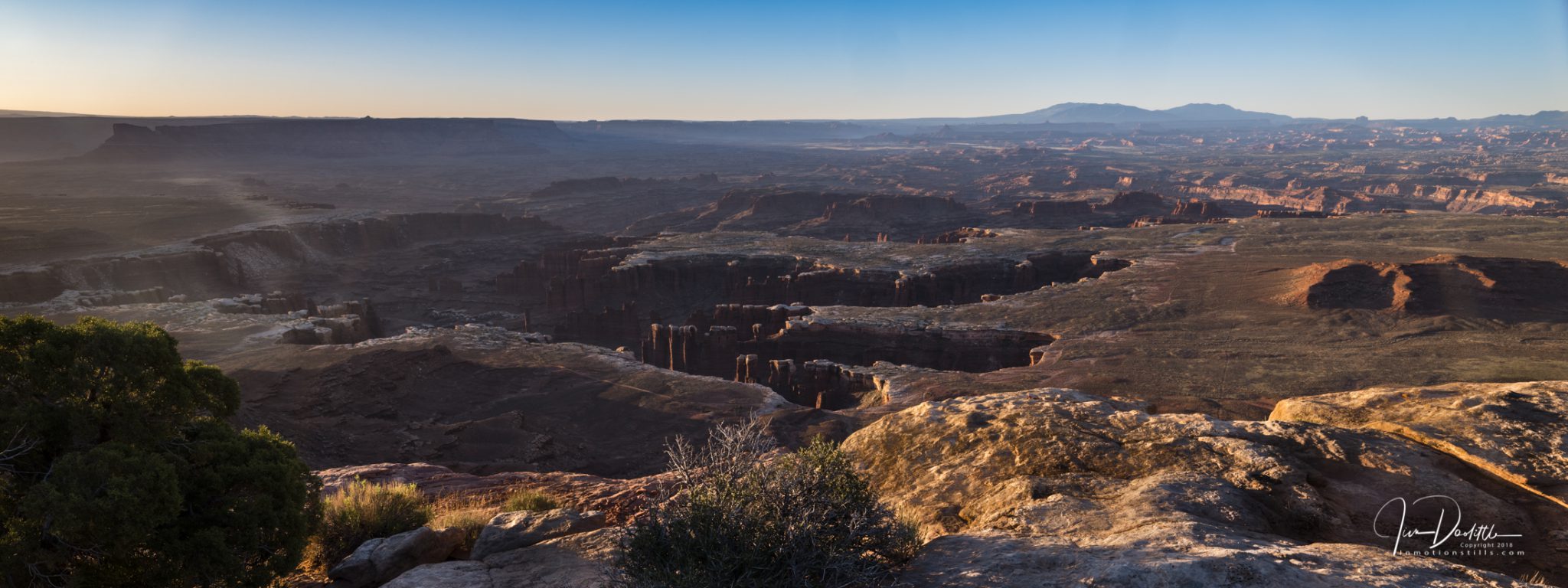
Cedar Mesa Spring 2023

Please enjoy the slideshow above and if interested, continue reading for more insight into the trip and the photographs I took.

It has been a long and really wonderful winter. Like other parts of the west we had an abundance of snow, 190″, which is a lot more than the 80″ of the past few years. The skiing was great, when I could get over the pass to Telluride, and was still able to get in 40+ days. The rest of our time was spent doing snow removal and staying warm in our cozy home. As I began to surrender to the coming spring I felt the pull to go to the desert with a camera.

One of my CRMS classmates, David Tanner, loves to keep our classmates and friends, of going on 50 years, in touch with each other. As part of this effort he invites us all to join him and his wife Carol in Cedar Mesa, Utah every spring to hike and explore, hang out and eat good food. This mimics the spring and fall trips that the school has for students where groups of 8 – 10 students head out with a faculty member to backpack. Many of these trips take place in and around Cedar Mesa. I have many fond memories of these trips and ever since have felt totally at home with my feet in the sand and climbing the sandstone ledges.

The photos in the slideshow above are from two trips to the Utah desert, the first was a two day trip to Bluff where I did a hike through Monument Valley with our 11 month old Kiki and then met up with my son James the following day for another day of hiking along Butler’s wash. I knew going into these trips that it wouldn’t be the same as the photography trips I have taken in the past. Being led by an enthusiastic chocolate lab and hiking with others isn’t conducive to landscape photography. Nonetheless I had some form of camera with me on all the hikes and the challenge to compose is always with me, good light or bad, tripod or not. So while some of the images were properly taken in good light with my GFX on a tripod, some were taken with my smaller Fuji XT4 freehand in harsh light and some were taken with my iPhone 14 Pro, but I was always doing my best to find a good composition, which is a good exercise and in my view the most important aspect of creating a compelling photograph. It is surprising to me how good the images are out of the iPhone 14 pro. I do use the Lightroom app and shoot in raw so that I have full ability to process them. I threw them up on a 60″ 4k TV and was pleased that the resolution was as good as it was. It is by no means a substitute for the pleasure of using a real camera but it serves a purpose.

Most of the hikes I took with my good friends were with a destination in mind. The Cedar Mesa of Utah, the Bears Ears, was an area where the Ancient Pueblo people lived after migrating from Chaco and then SW Colorado. The canyons are filled with ruins and artwork panels and visiting these was our destination most days. It is fascinating to see and walk about these structures, many of which are highly intact after twelve to thirteen hundred years. I could feel a presence many times. The structures are in most cases very small and I kept thinking that these people must have been pretty small to live in these tiny spaces. Most of the artifacts have either been archived or looted over the years so it was unlike when we visited while attending CRMS, when we would see pottery shards, corn husks and other artifacts undisturbed all over the ground.

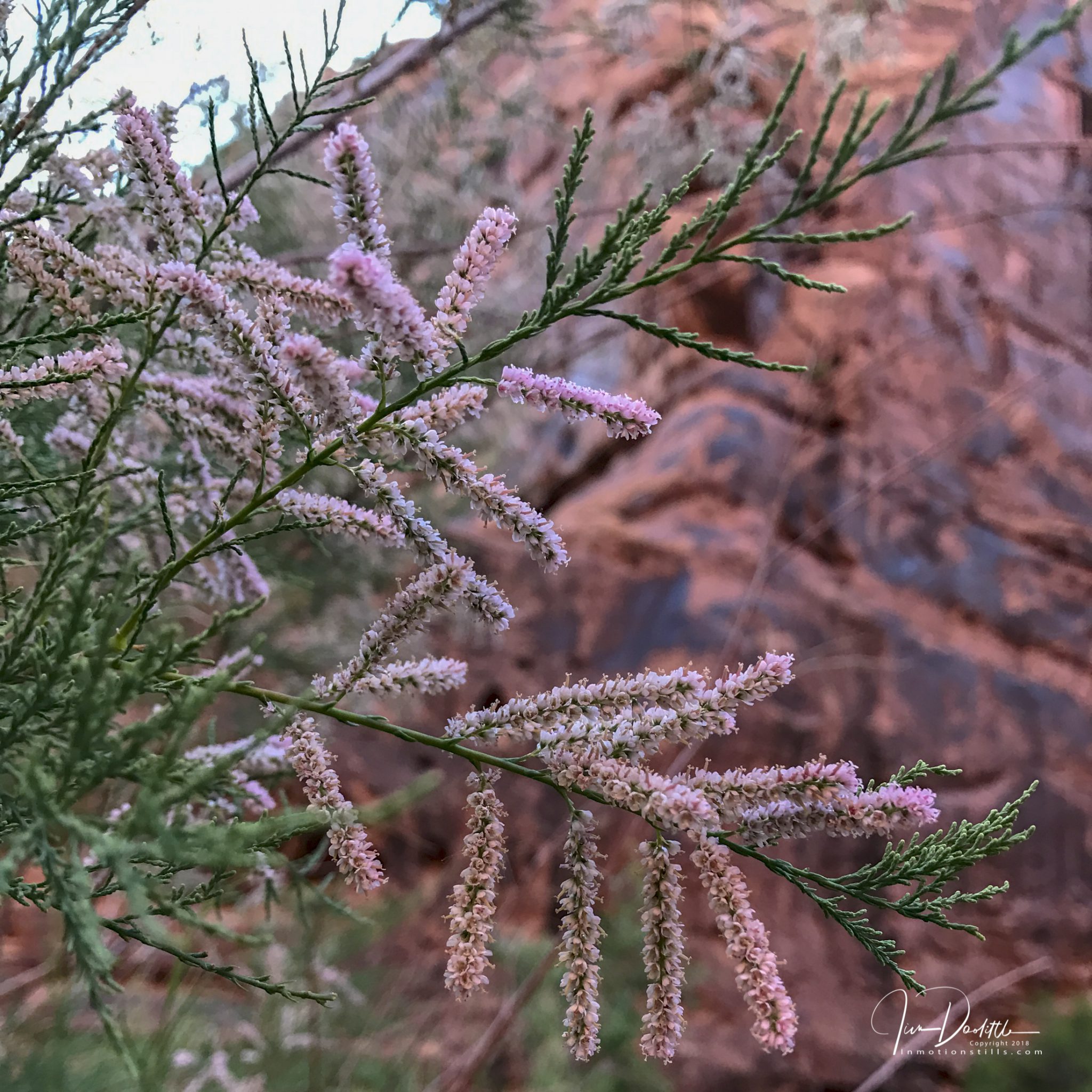
Other hikes were in canyons with no objective other then to enjoy the budding spring in the desert, with the vibrance of new leaves on the cottonwoods in the canyon bottoms and desert flowers everywhere. I find sandstone itself such a beautiful thing with the varied texture and colors that are exposed through the different layers as erosion has done its thing, and it is fun to scramble around on it with the trusty vibrate soles of my boots sticking like glue.

When I did finally have the space to explore and discover subjects after Lisa took the dogs back home, I had some familiar solo hikes in unnamed canyons when the light was gentle and with my eyes wide open enjoying the discovery and capture of whatever looked interesting to me. Most of all, I enjoyed the absolute quiet of the desert while taking advantage of the moments to not only capture an image but to connect with the silence.

The Bear’s Ears area is vast and includes a wealth of uncrowded opportunities for exploration. There are countless ruins and wall art panels within day hike distance, even more if you are into backpacking. There are countless canyons, large and small, that offer typical desert scenes, textures and colors. In the spring, the red of the sandstone is offset by the vibrant new growth on the cottonwoods and blooms of a multitude of desert flowers. When the moisture is plentiful during the winter, as it was this year, the runoff creates many pools of water in the canyons that offer opportunities for reflections and watering holes for the dogs.

I will continue to meet up with friends in the spring and hopefully fit a few solo trips for exploration and photography. I hope you enjoy the images in the slideshow. Please let me know what your think by sending a comment below. Thank you for taking the time to read this!

Read More
Jim
Bosque del Apache 2021

Please enjoy the slideshow above and if interested, continue reading for more insight into the trip and the photographs I took.

Our visit to the Bosque del Apache reserve was the last stop on our 2021 New Mexico trip. After visiting and doing some photography at White Sands for a few days, we drove over to Carlsbad Caverns for a night and hiked down to the bottom of the caverns. The following day we drove over to Las Cruces to visit an old friend and eat some good New Mexico Mexican food. The next morning we started heading north towards the Bosque. We stopped in Hatch to eat lunch and buy some chile before arriving at our campground in the afternoon. After checking in we headed over to the reserve for the late afternoon arrival of the birds.

Bird photography is very different to landscape photography where for the most part the subject is static and I’m composing the image with the camera on a tripod. Photographing birds requires different technique and equipment to be able to capture the birds in movement. I brought along my Canon 1DX ii with a 500mm lens mounted on a 2x extension. The 1DX can shoot at 12 – 16 frames per second and has decent auto focus capability. The 500 is heavy and long so I had a mono pod mounted to the lens to help support it. I knew I was out of practice for this kind of photography and really had no idea what I was about to witness this evening and the following morning.

We still had some time before the arrival of the birds so we drove around a bit to get our bearings and explore. It was enough for us to realize we could spend some days here. As the day wained we could see some birds starting to arrive at their landing strip so we found a parking spot and I got out with the camera while Lisa started to video the scene with her phone. It started out relatively calm as there were a few pairs of snow geese with some ducks also coming in so I was able to dial in the settings and practice my search and panning technique.

There was a steady flight into the landing area over the next half hour or so. As the birds arrived the volume of their speak increased and the symphony of their voices was non-stop. Many of the birds began to settle right away and others, especially the cranes, began a social dance as they fed. This got my attention and I began to point my camera at a few different pairs as the light became more and more beautiful. Following are photos that are additional to the portfolio images I used in the slideshow above.

The snow geese were the first to arrive and settle after a bit of feeding.

Then the cranes began to arrive and with their arrival the volume of their cackle increased. I encourage you to watch the slideshow to hear a little of the noise.

I followed this pair as the the day wained. Their dance was slow, graceful and somewhat hypnotic. See the slideshow for more photos of these cranes.

I kept shooting as the day turned to evening enjoying the amazing New Mexico sky as it became red with that warmth reflecting off the surface of the water and onto the cranes I was photographing. It was a truly amazing experience to be able to witness this and be immersed in the hypnotic effect of their flight and dance. After a long day and knowing we would be up well before dawn the next morning we headed back to the RV park for dinner and rest.

We headed out into the cold well before first light to stake out a parking spot and wait for…what, we didn’t know. We could hear the quiet cooing and warbling of the birds though it was too dark to see anything. As I was getting my camera ready and Lisa was in the running jeep staying warm, the quiet of the morning was rudely and surprisingly disturbed by someone’s vehicle alarm going off. Along with the horn blaring the headlights, which were pointed in the direction of the birds, were flashing. It was extremely startling and did the job of waking the birds and they subsequently took flight into the darkness. Needless to say I, along with many others, were flabbergasted as it took the owners of that vehicle 3-4 minutes to turn the damn thing off. Damage done, or so I thought. I spoke to someone nearby expressing my frustration and he simply said not to worry, that they’d be back. Sure enough as soon as the alarm stopped the birds returned and took up where they left off quietly moving about waiting for the day to break.

As the predawn light grew, a few groups of cranes and geese took flight and with each departure there would be increasing interest of the birds still in the water as they looked on at the departing birds. These first flights made for some nice captures as their bodies were siloetted against the red morning sky. The snow geese were in many of these first groups to take flight and this took my attention with the camera as they were usually in smaller groups making it easier to capture. With each departing flight, the level of activity and noise increased and signaled, unbeknownst to me, the chaos that was to come.

The birds were consistently taking off and flying towards the northeast leaving those still in the water to turn and stare in that direction. Then they began to move, the cranes taking slow steps with their spindly legs while the geese and ducks slowly paddled in that direction. It was a slow blur of constant movement towards the northeast as the noise was on a constant gain.

Then as the light began to break over the horizon, warming the breasts of the birds, and the sky lost its deep red and orange cast, it seemed a signal to the majority still in the water that it was time to go. With surprising voracity they all started to leave. My photography became a frenetic search for subjects as I panned that big lens around and the shutter whirred away. This is when luck played a great role in the images that I included in the slideshow. When the cranes began their take off, their steps became longer until they were seemingly running across the surface of the water before taking flight. This was fascinating to watch and I tried as best I could to capture this but the level and density of activity was so thick it was near to impossible to isolate this dance.

Then with a mad flourish of exodus, it was over. It was one of the most chaotic, activity filled, photographic sunrises I had ever experienced. I have spent many sunrise sessions waiting for the light after I was set up with the camera and then chasing the light as I scrambled to correct the exposure. But chasing the light, while chasing tens of thousands of subjects that were in constant movement? No this took the cake but it was a blast and we only felt that we wanted to return someday for more.

I hope you enjoyed reading this and as always I thank you for taking the time to share in this with me. Please let me know your thoughts below in the comments and feel free to share this with others.

Read More
Jim
White Sands 2021
White Sands 2021

Please enjoy the slideshow above and if interested, continue reading for more insight into the trip and the photographs I took.

The trip to Canyonlands wet our appetite for another road trip. The Sprinter chassis has been telling me to get the oil service done and since the nearest Mercedes dealer is in Albuquerque I decided to plan a trip around the service. Lisa wanted to come so we came up with a list places to go and things we wanted to do which included:

  • visiting a couple of our good friends
  • eating as much real Mexican food as possible
  • visiting and photographing White Sands National Park
  • vivisting Carlsbad Caverns
  • buying some Hatch chili from Hatch
  • visiting the Bosque del Apache and photographing the Sand Hill Cranes and Snow Geese

Maybe some of you know that I am a New Mexico native so the state, with its food, culture and beauty, is near and dear to me. I had been to these locations before but it had been many years ago. This article will focus on the trip to White Sands. I will have a subsequent post for the Bosque. I was hoping to be able to photograph the caverns but the way they have it lit washes out some of the color and any photographs would show only what they want the visiter to see not leaving any room for creative composition. The lighting is great though for the visit and I highly recommend the trip as it is truly an amazing place to see. The scale is hard to grasp and the rooms just keep getting larger and they keep on coming. We hiked all the way from the top to the bottom and were more than happy to take the elevator back up.

We drove down to Albuquerque in the afternoon and camped at a municipal RV camp in Bernalillo north of the city. The campground was only $14.00 a night with full hook-ups which is a great price. It was still an RV park, with close neighbors, and it was close to a busy road so kinda noisy. In fact both Lisa and I were having flashbacks to living in Port Hueneme California with motorcycles racing all night and sirens blaring. It was located right next to the Rio Grande with a nice view and the sunset was fantastic. After taking care of the dogs we headed out to get our first fix of Mexican food at Sadies on 4th street. I used to eat there as a kid, walking there from our house to go bowling and eat enchiladas. The enchiladas with red hadn’t missed a beat as the recipe was exactly the same and the sopapillas for dessert brought me back to that time. When I lived in Santa Fe for 15 years in the 80s, I ate New Mexican food probably 5 days a week and never tired of it.

The next day after dropping the RV off, we headed to REI to do some shopping and met a long time best of a friend from Santa Fe there. We shopped and visited, then at lunch time we headed over to Tomasitas to get our second fix for chile and ordered the green chile rellenos. After lunch we passed the time at a park near to where I grew up so the dogs could get out of the jeep until they were done servicing the RV. It was late afternoon before we were able to pick up the motor home so we got on the road and headed south towards Alamogordo and our campsite at the Oliver Lee State Park.

Oliver Lee was a part-time deputy US marshal, rancher and gunfighter who was on one side of the Lincoln county war. The state park is located where he had his ranch about nine miles south of Alamogordo. We enjoyed the campground. It was closer to dispersed camping in that the sites were separated nicely but we still had full hook-ups. Very quiet and dark at night with nice views and good hiking during the day. In doing some research for photographing white sands, it was clear that the best time to go is in the late afternoon, so in the morning I went for a hike/run up the canyon while Lisa walked the dogs close to the RV. I was a bit concerned by the wind that was blowing and I could see a cloud of sand over the dunes in the distance. Blowing sand and cameras are not a good mix and it’s best to forget about lens changes, but at the same time it can be an interesting effect.

We visited the park the two evenings we were there. There was no wind and no clouds so the feeling was one of quiet with soft colors. I took advantage of these conditions and shot close to sunset and into the blue hour. The dunes in White Sands are unlike others I have visited and photographed. The park is hugely vast, one could easily get lost out there. And, the sand is fine and so white! It is much like being in snow. The reflection of the sky on the sand is really attractive to me especially during the blue hour.

I shot the images in the slideshow with my Fuji GFX 50s using either the 63mm or the 100-200mm lenses. Our time there definitely wetted the appetite for more visits and there is conversation about another trip next fall. I hope you enjoy these photographs. Please let me know your thoughts in the comments. Thank you for taking the time to read this post!

To see images from our visit to the Bosque, please visit my journal post here.

Read More
Jim
Canyonlands 2021
Cantonlands 2021

Please enjoy the slideshow above and if interested, continue reading for more insight into the trip and the photographs I took.

During the summer we had decided to Airbnb our motor home since it was mostly just parked on our property. We have been making it available for friends and family anyway so it seemed a no brainer to make a little extra $. All in all the experiment went well and we will probably do it again starting late next spring. After our last guest left the third week in October, we were anxious to use the motor home for a quick trip to Utah.

Our original destination was Natural Bridges in the Bears Ears area. As we were driving there and south of Blanding, google directed us to turn onto a pretty rough dirt road. This didn’t seem right at all so I turned around and backtracked to the highway we should’ve been directed to only to see a sign that the road was closed till the end of the month. Of course nothing showed up on google maps when planning for the trip and we weren’t the only ones turned around as we saw others encountering the same closed road sign as we sat there trying to figure out what we would do.

I had planned early last spring to take a trip to the Needles area of Canyonlands only to be thwarted by some mechanical issues with the motor home. It was relatively close to where we were so we decided to head that way. I hadn’t been to this area since I attended CRMS in the 70s when we took backpacking trips, spring and fall, out to Utah. I have amazing memories from that time when there was little traffic in these canyons so I was looking forward to being in the southern part of the Canyonlands park again. After turning west, north of Monticello, the scenery began to change as the road descended down a red colored canyon with golden cottonwoods in the bottom. The challenge ahead was to find a camping spot and our preference was to find an off-grid dispersed camping location. We use Campendium to research camping locations and I had glanced at it before we headed out from Blanding but I didn’t note any specific locations assuming we would still have internet. Alas, as we drove closer to Canyonlands the internet service disappeared. Going by memory and signs on the road indicating camping options, we found a great spot off a dirt road to Hamburger Rocks.

The primary intention for this trip was to hike and explore. Since we had no way to do any planning, due to not having internet, we decided to head to the park the next morning and figure it out from there. For the rest of the afternoon we settled in, walked the dogs out in the desert, and enjoyed being in Utah once again. I was visually scanning  from our location for possible subjects for some late afternoon photography and saw in the near distance, further down the road, some rock formations. Remembering the name on the road sign, Hamburger Rocks, I decided to take the Jeep for a drive with my camera to check it out. I drove past many occupied campsites much closer together and was grateful to be where we were without any close neighbors. I followed the road down into a a bit of a canyon and found a place to park where I could then hike into the rock formations that were all around.

It was still and quiet as I climbed up into the rocks to a location that gave some nice viewpoints into the landscape. The sun was getting low already and I didn’t have too much time to explore so I centered in on a few subjects to play around with composing and set up the tripod. The first scene I worked on was Hamburger Rock Sunset View. Since the walk to the location was short I had my bigger pack with the GFX 50s and various lenses. I brought along some of my Hasselblad lenses that are a part of my Hasselblad 501cm film kit. I acquired a Metabones Speedbooster adapter to use these lenses on the GFX. The native GF lenses for the GFX are outstanding quality but I have been enjoying the results of the Hasselblad lenses. They are famous for their quality and provide a unique feel and softness to the bokeh when opening up the aperture. In many landscape photographs it is an objective to have the frame sharp from front to back but there are cases when it is nice to isolate a subject by having a soft background and/or foreground with a sharp subject. In the case for this photograph I used the CF 80mm, which is the has a 35mm equivalent of 50mm on the GFX. Once I settled on the composition and waited for the light, I figured I would need to create a focus stack as my foreground features were quite close. This involves taking multiple exposures focusing on different points within the frame; usually the immediate foreground, the mid ground and in the distant part of the frame then blending the images in Photoshop. I was counting on the side light of the warm late afternoon sun to create layers by lighting the tops of canyons and ridges to lead the eye to the distant high buttes and the La Sals beyond. As the light peaked I was firing away, foreground focus, mid-ground focus, distant focus. I continued ’til the clouds started to show a little color and the saturation of the red rock was deep. After I returned home and was reviewing the images, I was pleased and a bit amazed at how sharp the images were with this lens given that the brush and rocks in the foreground were only 4 – 5 feet away. I was happy to not have to focus stack for this image and just picked the exposure with the best light to convey the feeling I had taking in this amazing view.

I was wondering if the sky would show anymore color, which it often will just after I’ve moved my camera, but the sky/clouds will usually get more dramatic after the sun goes below the horizon shining its diffused light on the bottom of any clouds. Since my vision was to capture the light on the tops of the rocks leading into the distance, I decided to capture the other two subjects I had seen nearby while there was still sunlight. I knew I had to act pretty fast as the sun was rapidly moving towards the horizon of the far canyon wall. So much for the ‘calm and ease’ of doing landscape photography. I have experienced this many times, when working at the very end or beginning of the day, the light changes incredibly fast. This is where the phrase, ‘chasing the light’ comes in. The first of the next two images I took was Last Light. Nothing amazing about the composition but the light was sweet and the formations in the Utah desert are always fascinating to look at for me. Again the light hitting the tops of the formations helped create some layers that take the eye into the distance. Within a few minutes that light was gone and I turned around behind me to see just the very tops of some ‘hamburgers’ glowing red and orange so I quickly spun the tripod around composed Hamburger Glow. There is a lot of interest in this photograph that makes me wonder about the geology here, so much layering of the rock.

I then packed up and started walking back down towards the Jeep. As I walked the sky began to display some nice subtle light. I knew I wouldn’t have time to capture it with the camera in my pack so I took out my iPhone 11 and took Backlit Burger Row. When I shoot with my phone, I use the Adobe Lightroom App which allows me to shoot in RAW format so that I have the latitude to process the image as I please. Otherwise the phone will create a Jpeg, with its algorithms to auto process it built into the image. Shooting a jpeg makes any adjustments beyond very minor ones impossible. I really appreciate having this option when using the camera in my phone. Granted the lenses are tiny and the sensor is even smaller, I’ve been able to capture images that are pretty decent as long as there’s no pixel peeking.

I was getting ready to cross a wash to get to where the Jeep was parked, when I looked up the wash and saw the scene for Melting Reflections. Again, no time to do anything but get my phone out of my pocket before the light was gone. I still enjoy the process using my phone as I take in the same considerations for composition, lighting and exposure. I’m still creating, not just firing off a snapshot, so I’ve learned to let go of the difference in the quality and be grateful to have a camera I can use when it’s not possible to take the time to set up my other cameras. I love this image. The conditions, colors and features are so unique.

Canyonlands National Park

We headed over to the visitor’s center the following morning to get their map and guide for possible hikes. It was early in the day so we settled on a 10 mile hike out to view the confluence of Colorado and Green rivers. Most of the other hikes were much shorter or longer requiring backpacking and permits. I remembered, while on a backpacking trip when I was attending CRMS, that I had done a hike to the confluence and that it was a pretty fabulous view so we set out and I was wondering if this was the same view I had seen years before. From the trailhead, the trail quickly drops down into a canyon to follow the bottom for a ways before making the climb back out again. It became clear that this was how it would go for a while. I don’t remember now how much vertical the hike had but there was quite a bit of up and down going in and out of the canyons. The temperature was mild and great for hiking with some high clouds. The canyon bottoms were cool and on top the sun was warm.

Only when the route was going across the sand was a trail visible so there was massive use of cairns while on the sandstone. The park has done a good job keeping rock stacking idiots from adding to the existing cairns and creating confusion. The next was always in view so it was a matter of connecting the dots and marching on. I find hiking on the sandstone to be fun, trusting the soles of my boots to grip the course surface, which they do. The terrain was varied and interesting with amazing features and views around every corner. I did have my XT4 kit in my daypack but we were committed to our pace to reach the confluence and return in daylight so the few pictures I took along the way were with my phone. The sun was high overhead anyway so the light was bright and harsh. Nonetheless, I took a few photos as we continued out towards the rivers. One of the first, Stools, was one I literally walked into as the rock formation was framed by the dead oak. This one reminded me of photographs I took in the early ’70s when I was shooting black and white film. I processed it with warm almost sepia tones. The photo to the right shows that there was some color on the oaks here and there. While taking this one, I was perched above one of the many scrambles down the face a large rock to a lower level that made us wonder how we would get back up later in the day without ropes. As we came out onto the flats, the Needles came into view for the first time.

We had only passed a few other folks while hiking, but as we neared a point where the trail crossed a jeep trail, we heard the roar of some coming our way. There is a way to jeep out to the confluence, but our jeep wouldn’t have made it as the 4wd roads requires a lift and more clearance than we have on our factory set-up. We wanted to hike anyway as it offers a much more intimate experience with the landscape. The noise seemed out of place after miles of silence and as we continued, more came. When we arrived at the parking for the jeeps and the last bit of trail to the overlook, four or five jeeps were parked there. As we started towards the overlook we stopped to talk with a solo hiker who had just come from the overlook and was making his way back. He gave a tip to go a little off piste once we got there for the best view. We were glad to encounter all the rest of the folks who came in jeeps, making their way back out on the trail leaving us all alone to enjoy the view and have some lunch. I found a seat on a flat a half dozen feet from the edge, which Lisa felt uncomfortable with, so she sat a little ways away and snapped this picture of me.

I took out my phone and opened up my Viewfinder App to see how I could compose the view in front of me with the XT4. Unfortunately I didn’t have a wide enough lens to get the full field of view I wanted so again I turned to the iPhone 11 with the Lightroom app to get the shot of the confluence, Colorado Green Rivers Confluence. This is definitely one I would like to reshoot with a proper camera and I have a lens in mind that’ll do the trick. Some day… It is quite a breath taking view and I was happy to have some quiet time to sit and take it in.

We began on our way back after about a half an hour enjoying the view. I noted we had about 2 1/2 hours of daylight left so we set a rapid pace. The scrambles back up some of the rock faces didn’t pose much trouble as we assisted each other. When we were about a mile and a half from the trailhead the light became warm and golden reflecting off the sandstone that surrounded us so I took a few more images of nice views, one that I dug out the XT4 for, Needles. The first was with the iPhone of a very nice scene that I shot in ultra wide which would have been an equivalent of about 15mm on the XT4, a lens I didn’t have. Unfortunately that tiny ultra wide lens creates terrible distortion out at the edges but the image is ok to look at for the beautiful light. The next image featured in the slideshow was also captured with my phone, Window to La Sals. The last of the light, diffused by the clouds, provided just a bit of glow on the far canyon wall with the La Sals in the distance. Again I literally stepped right into this composition as this passage was on our path. The final image in the slideshow was of the Needles bathed in the diffused final light of the day. The Needles part of the park is vast and will be a destination for exploration sometime in the future.

As the light began to fade, so did Lisa’s knee, and when we encountered the last couple of canyon crossings, my ability to see the cairns diminished. I don’t recommend being on the move without the light to navigate these canyons when everything starts to look the same and I knew my head lamp wouldn’t have helped. I encouraged Lisa to move as fast as she could while I set out ahead so I could spot the cairns while still keeping her in site. We made it but not without a few wrong turns on my part which I sorted out before she caught up. We were both glad to see the last climb out to the trailhead parking as the last of the light was gone.

The Next Morning

We awoke to a solid layer of high clouds and a small puddle of water on the floor below the refrigerator. The freezer was defrosting due to the house batteries not keeping up with the demand. The high clouds also meant that there was much diminished solar charge going into them. It was our intention to stay three nights but that wouldn’t be possible now. The batteries were going on 3 1/2 years old, which for lead acid, was certainly towards the end of their usefulness. With all this in mind we decided to go back to the park for a shorter hike then leave to head home after lunch.

We consulted the map and saw a 3 mile hike up to the threshold of the Needles that sounded good to us. The physical aspect of the hike was similar to the previous day’s hike, without the scrambling, but the one clear difference was the number of people there. I’m guessing the difference in the distance and the strenuous nature of the longer hike attracted more people to this shorter hike. There wasn’t any particular feature that made me want to take a photograph and the sun was high and the light harsh so we enjoyed the exercise. When we arrived at the gateway, a narrow short slot that opened up into the beginning of the Needles, my phone stared buzzing with alerts as there was just a bit of a signal there. Since I was involved in some projects and having gone over two days without internet, I stayed there for about 10 minutes to let everything download and replied to a couple of emails while Lisa headed back to the trailhead. When I was done, I took off running back down the trail. I have occasionally done a bit of trail running when out hiking, but I really haven’t run regularly for probably 30 years. I quickly caught up to Lisa and felt like continuing to run so we agreed to meet down towards the trailhead.

Being that close to the Needles, again inspired me to return to do a deeper excursion into them to look for subjects to photograph. Since it’s only a 2 1/2 hour drive from our place I think it will happen maybe this coming spring. Hopefully I’ll be able to acquire a wider lens to properly capture the more expansive views of which there are many. The vast number of hoodoos and interesting features provide endless more intimate subjects too, so I look forward to future outings there.

If you’ve made it this far, thank you so much for taking the time and I hope you enjoyed the read and photographs.

With the gear packed up it was time to hike back to the cars where I couldn’t resist a little iPhone photography of some of the wildflowers in the canyon, I wanted to send a few of these to Lisa and my sisters.

Back in town we headed over to the brewery for a last chance to hang out together. This trip has seared into to me lifelong memories of being quiet and still during an extraordinary time in my life as my Mom was breathing through her final days. We were together somehow the whole week with our shared love and I celebrate her extraordinary life with these photographs.

Thank you for taking your time to share in this with me and I would love to hear from you if you’d like to leave a comment below.

Read More
Jim
Fall 2021 Photography

Fall 2021 Photography

Fall 2021 Photography

Due to the generous monsoon we had this summer and the warm temps during the late summer, the colors the trees displayed had more depth and a deeper orange component than last fall. The color lasted a good 3 – 4 weeks from the time the aspens started to show through ’til the cottonwoods in the valleys turned. The cottonwoods, especially, held their color a long time this year as our Indian simmer lingered. The trees finally dropped their leaves in earnest after a few early snows up at elevation and down here in the valley. September was a busy time for me which cut into my availability to get out but I still hiked with a camera in my pack four times this fall. Please enjoy the slideshow above to view the photographs I took this fall here in Colorado. The video is in 4K so it will convey most of the quality of the images. You may need to request the higher quality from the settings in YouTube as it’ll default to a lower playback quality sometimes. Some of these photographs are available in my 2022 Calendar and this year’s Artist Cards that are both still available to order.

Please continue reading if you’d like more insight into these photographs and the outings I took this fall.

Things Learned

  • In years past I found that the intense colors of the leaves, whether it was the oaks and maples of Zion or the aspens of SW Colorado last year, overwhelmed both the film or the sensor of my camera. The shiny surface of the leaves, especially aspen leaves, reflects back strong highlights even when the subject is in reflected light. Even pulling the luminosity of those colors back in post processing wasn’t adequate to allow for the detail of the leaves to come through. This year I exposed for the brightest colors on the trees and then dialed the exposure back a stop or two before exposing the image. The files have ample dynamic range to bring back the detail in the shadows while capturing more detail of the leaves so this worked much better.
  • I especially enjoy when the trees are at the beginning of the change, when there are still plenty of trees with green leaves. I enjoy the variation of color and texture added to the scene and find it’s more visually interesting then a frame filled with a blast of one very saturated color. Just me but I’d love to hear your thoughts.
  • As you probably remember I have lightened the load in my pack when hiking now for a couple of years. I have a small Tenba bag that holds a Fuji XT4 with two lenses that fits easily into my Gregory daypack. I strap my smaller carbon tripod to the outside and the total added weight is about 9 pounds. This is a big difference to the large pack I carry for shorter hikes and outings that can weigh upwards to 45 lbs depending on which cameras and lenses I carry. While the XT4 kit is really good, I am spoiled by the very fine results of its bigger brother the medium format GFX 50s that I’ve been shooting with for the past several years. In the mountains here and when photographing trees, I have found that a normal focal length of the 35mm equivalent of 50mm can capture most compositions. Out of curiosity I put the GFX with one lens, the 63mm which in medium format is a 50mm equivalent, my filters and a battery in the same Tenba bag and found to my pleasure that it weighed a pound less than the XT4 kit. Granted I didn’t have the flexibility of a focal range of 24mm to 300mm that the two lenses of that kit provide, I knew that the 63mm would work for many of the possible compositions and I like the challenge and simplicity of working with only one focal length.

Hike up to the base of Lizard Head

This was a solo outing on a familiar hike up to 12,000′. It was partly an exploratory outing to see if the aspens were starting to show some color. On the drive up to the trailhead there were just a few patches of color showing so I decided to go for the hike and see if I could get a good photograph of the fourteeners near Lizard Head. I had taken a few with my phone on previous hikes but never had one of my of my cameras with me. The hike is somewhat strenuous climbing 2000′ in 3 miles but I felt good and enjoyed setting a quick pace. Once I broke through above timberline I was pleased to see that the low scrub bushes and tundra had turned a beautiful golden color that was washed in the late afternoon light. I scouted for a location that offered a good viewpoint and set up the camera on the tripod. At first I focused on Mt Wilson and took this photograph at a focal length of 85mm. This didn’t make the cut for the slideshow, though it does capture the magnificence of the mountain for me, but what was catching my attention up there was the warm glow of the scrubs with the backdrop of the blue peaks in shadow. I changed lenses and set up a panorama of the three peaks, El Diente, Mt Wilson and Gladstone with much more of the warm glow of the tundra in the foreground. Again I enjoy that there is still various shades of color and texture and the composition expresses the amazing view available there. It is one of my favorite hikes and I encourage a visit for you to see for yourself.

West Dolores Above Dutton

Last fall I focused my attention on the aspens of the upper Dolores river and the area around our place further down the valley. Late in season last year, after the aspens were mostly dropping their leaves, I took a drive up the West Dolores towards Dutton at dawn one morning to see what I could find. Despite most of the leaves being on the ground, I enjoyed the morning and added a few more images to my portfolio. It was clear to me that this was where I wanted to focus my attention for future fall color as both sides of the valley were covered in aspen.

I had taken a hike this past summer up the Navajo Lake trail above Dutton and discovered a beautiful area filled with subjects for fall color. I didn’t have a camera other than my phone with me on this particular hike as I was in exploratory mode and looking for a good hike but it wet my appetite to return in the fall. One of the discoveries were some waterfalls and I made a promise to myself and to Lisa to return to show her and properly photograph them. When my son James came to spend a week to visit and hike, this became the first hike we took and Lisa joined us. There are four images taken this day that are included in the slideshow; Fall Gradient, Saturation, Journey, Upper West Dolores and West Dolores Falls. All these images were taken with the Fuji GFX 50s and the 63mm except Saturation which I took with the iPhone 11. Our intended destination was the falls where we all spent some time enjoying and photographing them. I got to get a little extra exercise playing catchup as I scrambled after them once I finished capturing a couple of photos I took in the basin. After hiking back out from the falls, we all agreed to continue up the trail to possibly get a view of some distant falls that cascade off the high peaks below Navajo Lake. On the way back down I stopped to capture Saturation with my phone and took a picture of Lisa in the glow of the aspens. Settings and technical details for all photos from this outing are displayed with each image in the slideshow. Again, a few of these photos are featured in the Calendar.

Hike to Hope Lake

This hike was something I’d researched a little as a good one to do with James. I had no idea really what to expect, whether there were any aspen groves or views of them, but we committed to do it and I again packed up the GFX with the 63mm lens. After several weeks of amazing weather, when James arrived it started to change and after a few days we had day after day of rain, the day of this hike included. The Hope Lake trailhead is above Trout Lake at the top of Lizard Head pass and as we drove up we could see that the rain had turned to snow across the peaks. As we headed off up the trail we soon encountered a couple coming down wearing clamp-on micro spikes. They told us there was snow about a mile further up and that the trail was quite slippery. We continued on. When we encountered the snow it was melting off as bits of sun shown through the storm clouds. We continued on. Once the trail started to switch back, gaining more altitude, it started lightly snowing again. On one of the switchbacks the view opened up to one of the peaks that surrounded us but had remained hidden behind the clouds. It was here that I stopped to captured the scene Lake Hope Trail. It was quite beautiful, misty snow clouds blowing about the slopes, first encounter of this winter for me. After a few minutes we continued on, feeling a bit of urgency to obtain the objective of Hope Lake and beat the weather and the end of the day. We walked on into the clouds and snow and after another mile or two of hiking through a couple inches of snow we reached the lake shrouded in clouds. We spent a few minutes there and snapped a few phone picts to record the moment then headed back down the trail as it started to snow in earnest. As we descended below the storm, one of the nearby peaks revealed itself and a couple of moments of amazing light happened. I was able to capture the moment in the photograph Early Storm, before it all changed again.

A Return to the West Dolores

On our previous hike up to this area, as we headed back down I was trailing behind scoping for more subjects. I saw a really cool aspen tree off the trail in a grove that was surrounded by a darker backdrop. I took a quick phone picture and noted the location so I could return another time when the light was right. This was the nudge that got me out for what ended up being my last outing this fall in Colorado. It was only five days since James and I hiked to Hope Lake. He had headed back to California so this would be a solo outing. The color change was rapidly peaking and the same area we had been in only a week before showed the trees with mostly yellow and orange leaves. It was a beautiful afternoon as I headed up the trail with my bigger pack so I could have additional lenses with me. I settled into the area below the falls with a view of the peaks and surrounding aspen groves. A little of the snow from the storms the previous week clung to the tops of the peaks, the air was still and I was the only soul there, the silence caressing me. I dropped my pack and set up the camera with a good vantage point to capture the mountains as backdrop to the trees and took photos as the light danced in and out of the clouds. I explored a few different compositions and came away with one of the south face of Mt Wilson with a foreground of trees that framed the peak. What I really like about this photo and what set it apart from a few of the others that I took here, was that the ridge between the trees and the peak was in shadow creating a nice dark backdrop for the trees in the foreground lit up by the late afternoon sun.

I then grabbed the tripod and the camera to go find the tree I had spotted on our last hike up here. The light was soft and perfect, illuminating the trunk and the dead trunks of some past young trees and the leaves softly glowed against the dark background of the evergreens behind. I initially composed for the whole tree but there was too much competition for the beautiful shapes of the trunks from two other trees on either side. So I went in close to frame in on the center of the tree, including just a few of the leaves. When I was later processing, I cropped it even a bit more till I settled on the final composition of Grace.

The next two images, West Dolores Basin and Backlight Glow, were a few steps away from where I had dropped my pack. I wandered the area pausing to listen to the silence and breathe as I refined the framing for these final two images. Backlight Glow was fun and a challenge. The framing of the aspens by the evergreens in the foreground was perfect. I was using the 100mm – 200mm and it is always a challenge to maintain sharpness beyond your subject with a long focal length lens. I wanted the immediate foreground sharp and progressively softer going back into the frame. I had to use a tight aperture setting of f/26 to achieve this while focusing on the brush just past the evergreens. The aspens are a little soft which complimented the glow of the backlight and the trees in the distance are softer still which worked perfectly with the hazy atmosphere from the sun about to drop below the far ridge with its warm light flowing from back to front through the aspens and the brush between the evergreens. All four of the images from this day make up this year’s Artist Card Set available in the store.

While I always enjoy sharing time with people dear to me in these places I love to explore, I also always enjoy when I get a chance to be in solitude amongst such beauty.

Let me know your thoughts and comments or any questions you might have in the comment section below. Thank you for taking the time to share in this and if you are new and haven’t subscribed to my newsletter and want to be notified when I publish a journal post, please use the little form at the top of the side column on the left of this page.

Read More
Light Dark

Content is protected. Right-click function is disabled.